


Source: Originally published on TAYSAD Mag
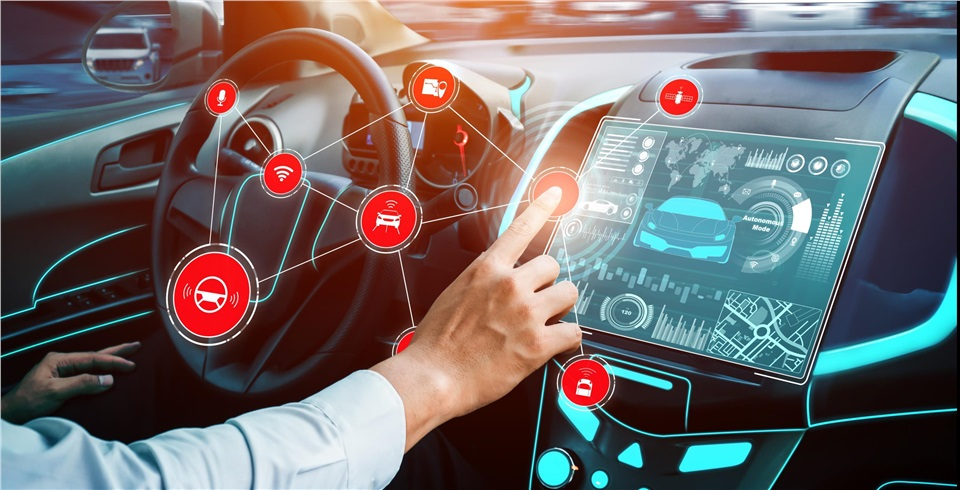
Technology has faced some setbacks and automakers’ investment in battery-electric vehicles has reduced interest in autonomous driving. However, autonomous technology is back on the agenda and heading to market in a major way.
Autonomous driving has returned to the front lines of industry agenda. According to sources within the sector who spoke at CES 2026, held in Las Vegas in early January, this renewed momentum is being driven primarily by advancements in artificial intelligence and market success.
Automakers’ interest in pursuing high-level Level 4 and 5 autonomous driving has cooled in recent years. The technology has faced barriers, OEMs have stepped back from mobility service plans, and current product development budgets have been largely directed toward battery-electric vehicles.
However, with policy-driven slowdowns in the US, continued cost disadvantages compared to internal combustion engines, and a consumer base still reluctant to switch to fully electric vehicles in sufficiently large numbers, industry investment has begun to flow away from BEVs and back toward advanced driver-assistance systems (ADAS) technology.
Why Automakers Are Investing More in ADAS
Rajat Sagar, vice president of product management for the Snapdragon Ride Pilot platform at Qualcomm (developed in collaboration with BMW), said, “I believe automakers around the world see the benefits that autonomous driving can bring.”
Sagar noted that automakers in China and others like Tesla are increasingly deploying more sophisticated ADAS capabilities as a way to attract consumers. “This is what’s fueling the need for these applications,” he added.
C.J. Finn, US automotive leader at PricewaterhouseCoopers, argues that automakers now see being among the first to offer higher levels of autonomous driving as the best near-term opportunity to gain market share.
Finn told WardsAuto: “There’s a constant battle about what that [next] technology is where if you make the first move, you can really capture market share. Some thought it might be electrification, but autonomous is that next thing… When you go from Level 2-plus to Level 4, that’s the game changer.”
Vlad Voroninski, CEO of California-based startup Helm.ai, acknowledges that money is flowing back into autonomous driving once again. “OEMs are realizing that the main revenue driver will be assisted driving for commercial vehicles. Capital is flowing there,” he said. “This is probably the number one topic in automotive companies’ boardrooms.”
Even in the US market, there is evidence that buyers are beginning to see real demand from consumers. Research firm AutoPacific said that in July, 43% of US vehicle buyers indicated that hands-free semi-autonomous driving for highway use—Level 2-plus systems like General Motors’ Super Cruise, Ford’s BlueCruise, and Tesla’s Full Self Driving—was the most desired technology in their next vehicle. This represented a significant 20-point increase from a year earlier.
A 2023 McKinsey study showed that two-thirds of consumers would be willing to pay a $10,000 premium for Level 4 autonomous driving technology (hands and eyes-free on both highways and city roads) in their next vehicle. Precedence Research forecasts that the autonomous vehicle market could exceed $2 trillion annually by 2035 and grow by more than 35% per year from now until then.
How Generative AI is Accelerating Momentum
What makes all of this possible is rapid technological advancement—largely driven by a leap in AI capabilities that has transformed the approach to autonomous driving software development, as well as advances and proliferation in sensor technology that increase the quality and volume of data needed to perfect ADAS operations. For example, Mobileye said it collects real-time data from approximately 8 million vehicles globally and gathered 32 billion miles (51 billion kilometers) of data last year.
Manuela Locarno Ajayi, product-technology manager at TomTom, said, “What we’re doing today is not something we decided to do yesterday,” noting that with half the vehicles on roads now connected, developers have rich real-world performance data available to help fine-tune their software. “We’ve been trying to do this for a long time. But now the technology is catching up to be scalable and cost-effective and to have this level of precision.”
Using CES 2026 to showcase its next-generation high-resolution mapping for navigation systems it supplies to Volkswagen’s CARIAD software development group and others, TomTom said it can now map 470,000 miles (750,000 kilometers) per day thanks to advancements in AI technology and the increasing amount of available real-world data.
