AFTERMARKET
Control Arm
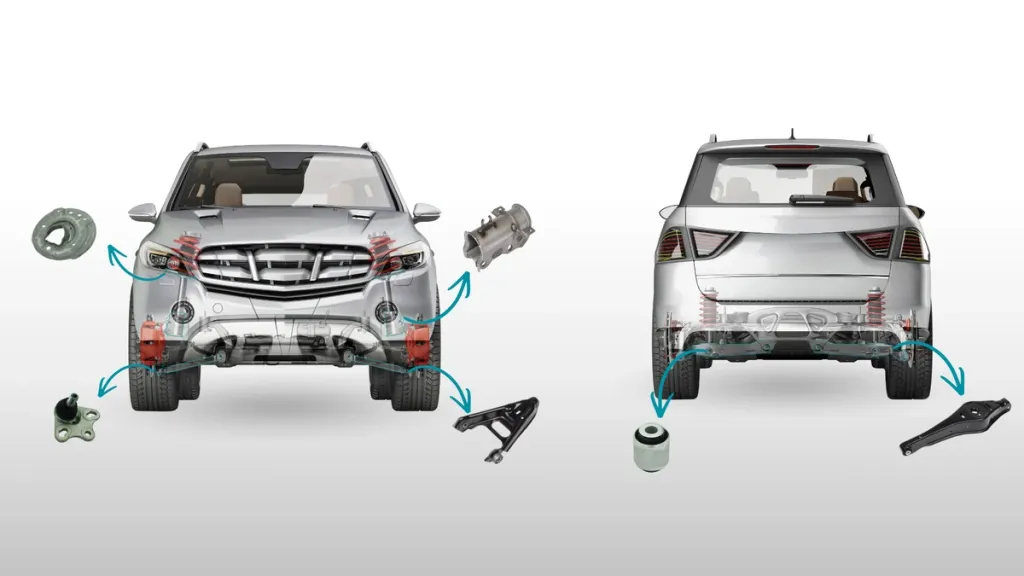
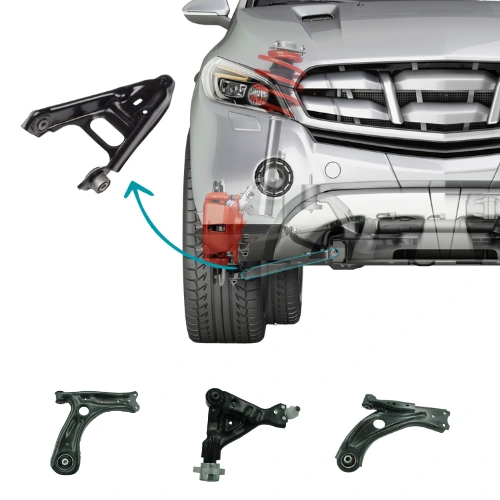
Control arms are manufactured as safety-critical suspension components requiring tight dimensional tolerances, controlled welding sequences, and verified structural performance. All engineering stages—from material selection and forming simulations to fixture design, welding validation, and dimensional control—are carried out in-house. Integrated bushing and ball joint interfaces are engineered and validated as part of the complete suspension assembly, ensuring consistent performance under static and dynamic loading conditions.
Ball Joint
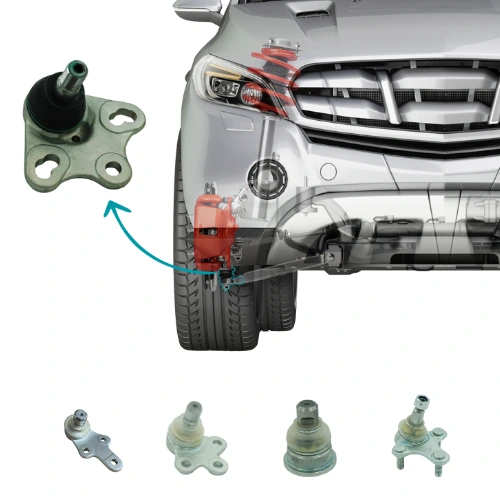
Ball joints are produced as precision-critical components where surface quality, internal clearances, and sealing integrity directly influence steering safety and service life. Design, machining, surface treatment, and protective boot integration are managed through controlled processes. Static strength, articulation behavior, and fatigue performance are verified using internally developed test equipment to ensure reliable operation under real road and load conditions.
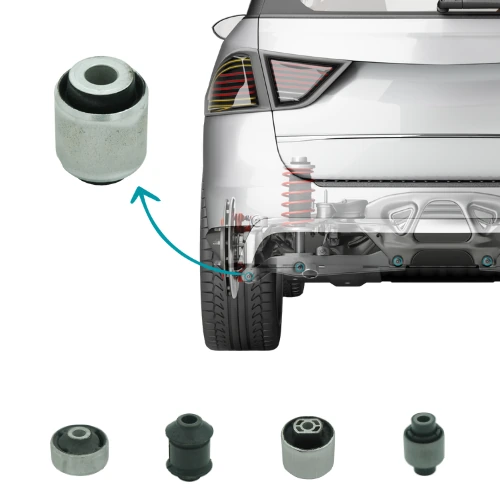
Bushing – Silent Block
Rubber-to-metal bushings are manufactured through fully integrated in-house processes, including mold design, surface preparation, sandblasting, chemical bonding, and controlled vulcanization. Stiffness characteristics and damping behavior are engineered according to vehicle-specific requirements. Static, dynamic, and durability tests are conducted internally to validate long-term performance under cyclic loads and environmental exposure.
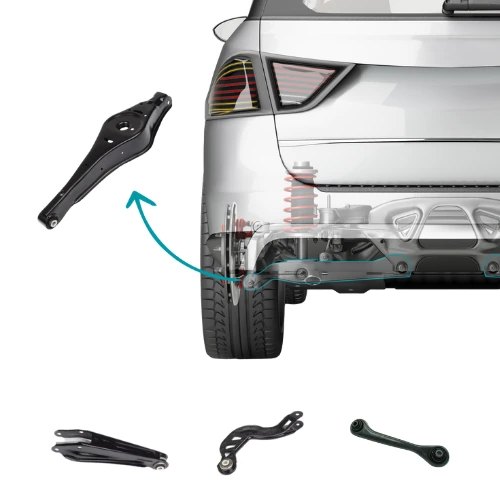
Track Control Arm
Track control arms are engineered to meet evolving rear suspension architectures and vehicle load requirements. Geometry optimization, material selection, and joining methods are defined through structural analysis and process validation. Dimensional stability, vibration behavior, and fatigue resistance are verified through in-house testing to ensure consistent suspension control under variable driving and loading conditions.
Shock Absorber Components
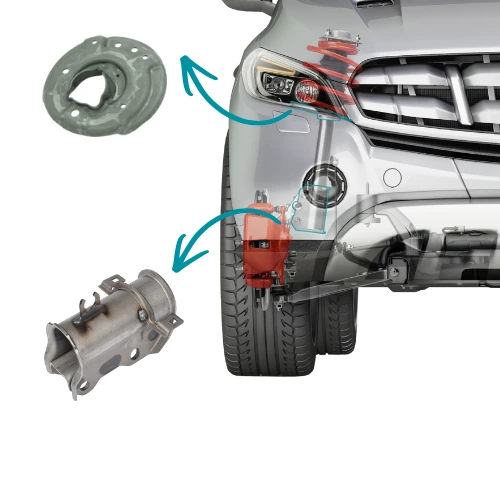
Spring seats and damper brackets are manufactured as load-bearing components requiring precise geometry and controlled forming and welding processes. Structural integrity and dimensional accuracy are ensured through dedicated tooling, fixture design, and process validation. Static strength and durability performance are verified under representative driving loads to support long-term suspension stability.