Boosting Manufacturing Efficiency with Quick Die Change
Oskim Otomotiv — Lean Manufacturing Blog
In automotive manufacturing, competitiveness today isn’t won by quality alone — it’s also won by flexibility. As customer demand diversifies, manufacturers are increasingly required to produce in smaller batches with more frequent model and part changeovers. This is exactly where SMED (Single-Minute Exchange of Die) comes in — a method widely known as “quick die change” or “rapid setup.”
In this article, we explain what SMED is, where it came from, how it’s implemented, and why it matters for the automotive industry, based on established sources.
The Origins of SMED
SMED was developed by Japanese industrial engineer Shigeo Shingo between the 1950s and 1960s, through his work at Toyota and Mazda. Shingo’s key discovery was that most of the time lost during press die changeovers came from work that was unnecessarily being done while the machine was stopped, even though it could have been done while the machine was still running.
The term “single minute” doesn’t mean changeovers must take exactly one minute — it means the goal is to bring changeover time down to single digits, i.e. under 10 minutes. The original Toyota case is striking: a stamping press changeover that took 4 hours in the early 1950s was reduced to just 3 minutes by 1969.
The Core Logic: Separating Internal and External Activities
At the heart of SMED is the separation of changeover work into two categories:
- Internal activities: Tasks that can only be performed while the machine is completely stopped (e.g., removing and installing the die).
- External activities: Tasks that can be prepared in advance while the machine is still running (e.g., transporting the next die to the machine beforehand).
Shingo’s method follows a simple logic: first separate internal and external activities, then convert as many internal activities as possible into external ones, and finally streamline and simplify everything that remains. In many factories, a significant share (often estimated at around 30–50%) of what operators do while the machine is stopped is actually work that could be done while the machine is still running — it just hasn’t been moved out yet.
The Seven Basic Steps of SMED
- Observe and record the current process – The changeover is observed from start to finish at least once, with every activity and its duration documented.
- Separate internal and external activities – Determine which tasks must happen while the machine is stopped, and which can be done while it’s running.
- Convert internal activities to external wherever possible – For example, pre-heating a die or pre-staging tools before the changeover begins.
- Streamline internal activities – Standardized heights, quick-release fasteners, functional clamps, and similar solutions shorten the remaining internal work.
- Streamline external activities – Material handling, tool transport, and preparation steps are also optimized.
- Standardize and document the new process – The improved method is written down, with visual control boards and checklists put in place.
- Review and continuously improve – SMED is not a one-time project; it’s an iterative improvement cycle.
Why SMED Matters So Much in the Automotive Industry
Automotive manufacturing — particularly sheet metal forming, injection molding, and stamping lines — is an area with high model variety and frequent die or tooling changes. SMED’s impact on the automotive sector shows up in several ways:
- Smaller batch sizes: Shorter changeover times reduce the economic lot size, aligning directly with just-in-time (JIT) production and pull-system (kanban) logic.
- Lower inventory levels: Smaller batches mean less work-in-process and raw material inventory tied up on the floor.
- Higher OEE (Overall Equipment Effectiveness): Changeover time directly affects the availability component of OEE; shorter changeovers keep machines productive for longer.
- Faster response to demand: A clear competitive advantage for orders requiring frequent model or variant changes.
- Safer, more standardized processes: Standardized changeover procedures with visual checkpoints reduce the risk of errors and accidents.
According to Shingo’s own data from consulting engagements between 1975 and 1985, average setup times were reduced to roughly 2.5% of their original value — a roughly 40-fold improvement. Across various industry case studies, changeover time reductions averaging over 90% have also been reported, though actual results naturally vary depending on the starting maturity of the process.
A Practical Analogy: The Pit Stop Mindset
One of the most common ways to explain SMED is through the motorsport pit stop. While an average person might take 15 minutes to change a single tire, a professional pit crew can change all four tires in just a few seconds. What makes this possible is preparing work in advance, working in parallel with a coordinated team, and following a standardized, heavily rehearsed process. The logic of SMED on the factory floor is exactly the same: move preparation upstream, run tasks in parallel, and standardize the process.
Conclusion
For more than 70 years, SMED has proven its value across many industries, particularly in automotive manufacturing. It is not merely a technique for reducing setup time; it is a comprehensive lean manufacturing approach that lowers inventory, increases production flexibility, improves process standardization, and reduces total manufacturing costs.
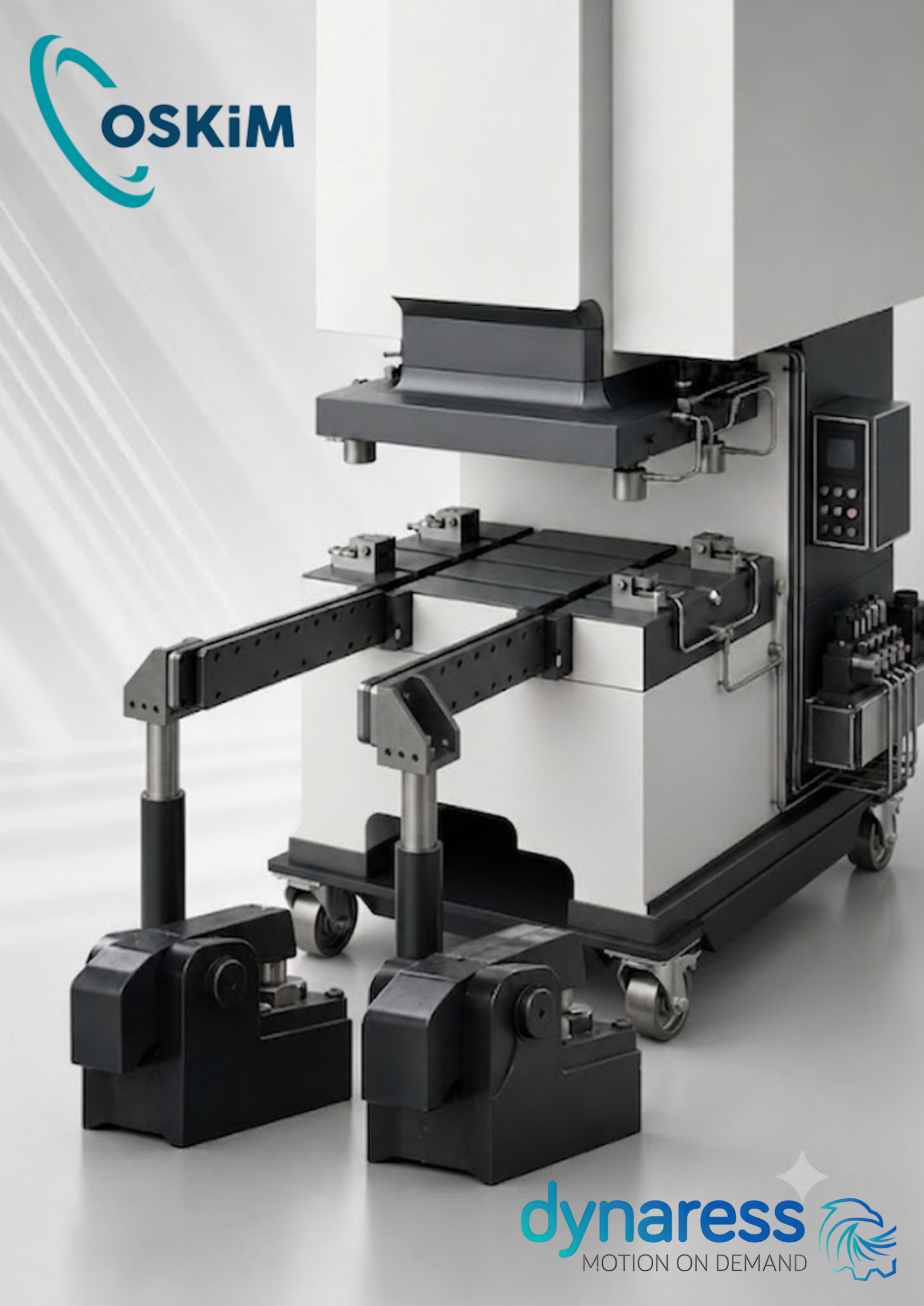
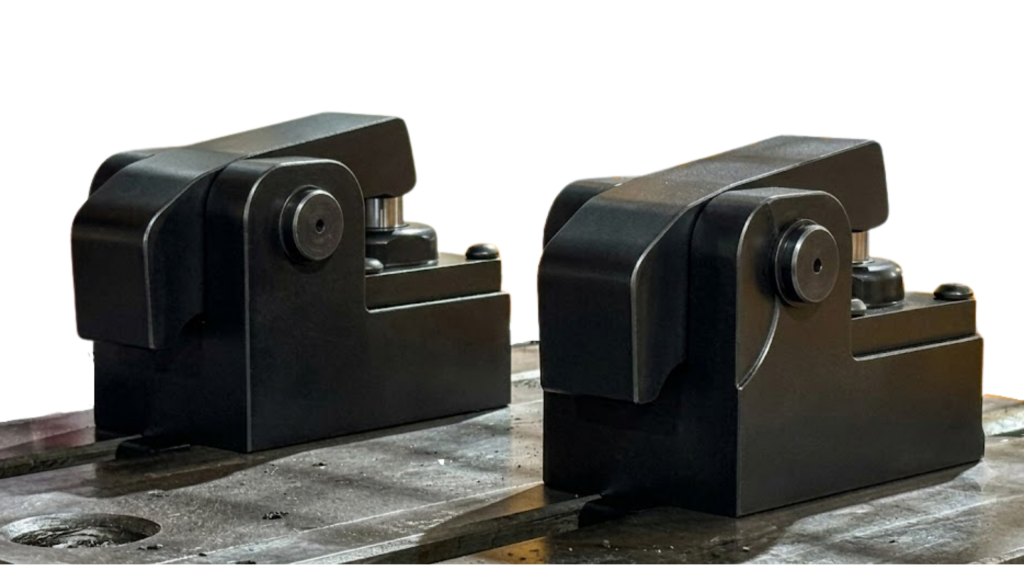
At Oskim Otomotiv, we consider the systematic application of quick die change principles an important part of delivering faster and more flexible solutions to our customers while strengthening our culture of continuous improvement. Standardized die heights, quick-release fasteners, functional clamps, die lifters, loading arms, and other SMED equipment solutions can further reduce internal setup activities while making die changeovers safer, faster, and more repeatable.
References
1. Wikipedia – Single-minute exchange of die. https://en.wikipedia.org/wiki/Single-minute_exchange_of_die
2. Lean Production – SMED (Single-Minute Exchange of Die). https://www.leanproduction.com/smed/
3. Lean Enterprise Institute – Single Minute Exchange of Die. https://www.lean.org/lexicon-terms/single-minute-exchange-of-die/
4. Operations1 – What is SMED (Single minute exchange of die)? https://operations1.com/en/glossary/single-minute-exchange-of-die
5. Symestic – SMED (Single-Minute Exchange of Die): Definition & 7 Steps. https://www.symestic.com/en-us/what-is/smed
6. Lean Management Institute – Single minute exchange of die (SMED). https://en.leaninstituut.nl/lean-lexicon/single-minute-exchange-of-die-smed
7. HubPages – SMED: Shigeo Shingo’s Single-Minute Exchange of Die. https://discover.hubpages.com/business/SMED
Note: Original source of Shigeo Shingo’s method and data: Shingo, S. (1985). A Revolution in Manufacturing: The SMED System. Productivity Press.